
I generally do not talk about the EU politics on this blog (I have enough of it in my full-time job) but this story keeps popping up on my mental screen, and not just because I’m writing a journal article about it. It’s because it is an example of how in Europe we can get things spectacularly wrong.
It’s not menial stuff: Galileo matters.
When operational “Galileo system will consist of 24 operational satellites plus six in-orbit spares, positioned in three circular Medium Earth Orbit (MEO) planes at 23 222 km altitude above the Earth, and at an inclination of the orbital planes of 56 degrees to the equator. […] The Galileo navigation signals will provide good coverage even at latitudes up to 75 degrees north, which corresponds to Norway’s North Cape – the most northerly tip of Europe – and beyond. The large number of satellites together with the carefully-optimised constellation design, plus the availability of the three active spare satellites per orbital plane, will ensure that the loss of one satellite should have no discernible effect on the user.” (ESA; for the full description, see this).
It has been five months that the UK and the EU exchange strong-worded declarations about who is going to get access to Galileo, and the resolution is far from granted or even in sight. To keep it simple: the UK wants to keep its unrestricted access to a system it has been one of the leading parts to develop -and pay-for it (right); the EU 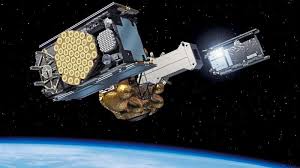 says the security features of Galileo (i.e. the security-enhanced PRS system) don’t allow a non-member state this kind of access (also right). How to solve the conundrum?
While the two parties are threatening each other with retaliatory measures (such as stopping British companies to work in Galileo by obliging them to previously obtain an express security clearance from ministers to engage in new contracts; read this BBC article, 23 May 2018), things can be addressed and solved with a more conciliatory approach. There’s a precedent for a non-EU participation in Galileo (Norway, since 2010) and the European Space Agency in charge of Galileo is not an EU body per se.
Let’s hope that, for the future of the European space sector as a whole, reason and good sense prevail.


Leave a Reply