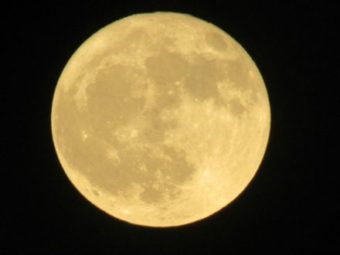

If you missed this news, read it again: it’s not a scam and it’s impressive in its own right. We’re going to have another “moon” (or moons, intended as satellites) out there, and it is going to address, and possibly solve, the Chinese needs for all-night illumination. First city to benefit from them: Chengdu, one of the major cities of China backyard provinces.
“Wu Chunfeng, head of Tian Fu New Area Science Society in Chengdu in southwest China, told China Daily that the plan is to place the “moon” into orbit above Chengdu via the Xichang Satellite Launch Center in Sichuan province by 2020. If successful, three additional “moons” will be launched by 2022.” According to the plan, the Chinese would launch a satellite about 300 miles above the ground, which would be enough to light up around 50 square miles.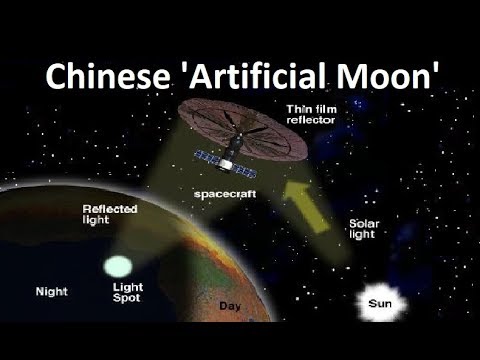
There are many who think this ambitious plan is not going to work as smoothly has the Chinese authorities imagine. The biggest flaw, in their opinion, is that a satellite can maybe fly low enough to deliver the necessary light but it wouldn’t be able to stay in one place as required.
“Their claim for 1 LEO sat at 300 miles must be a typo or misinformed spokesperson.[…] You could hover a satellite over a particular city, which of course is not possible. Satellites that stay over a fixed point on the Earth, what’s called a geostationary orbit, sit much further away: about 38,000 miles. At that distance, the reflective surface would need to be massive to deliver enough light for humans to see back to Earth. At a distance of just 300 miles the moon would whip around the Earth at thousands of miles per hour, beaming its light on any one place for only a fraction of a second. You could keep an artificial moon in place with rocket thrusters but […] it would eat up fuel, adding to the cost and requiring constant refueling.” (Read the whole story here).
No matter how this is going to end, the idea is daring, and I can’t wait to see how it ends. Stay tuned.


Leave a Reply