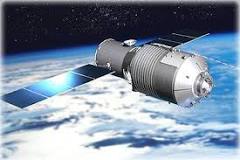

In case you don’t know, we’re all getting ready for fall of a space lab on our heads, at some moments in the next two or three weeks. Worrying stuff, I agree. The station is Tiangong-1 (= the palace of Heaven) an eight-tonne Chinese space station launched in 2011, whose missions ended in March 2016 and that has since then orbited at an average height of 250km (if you are curious about how it compares with ISS in terms of size and equipment, read this).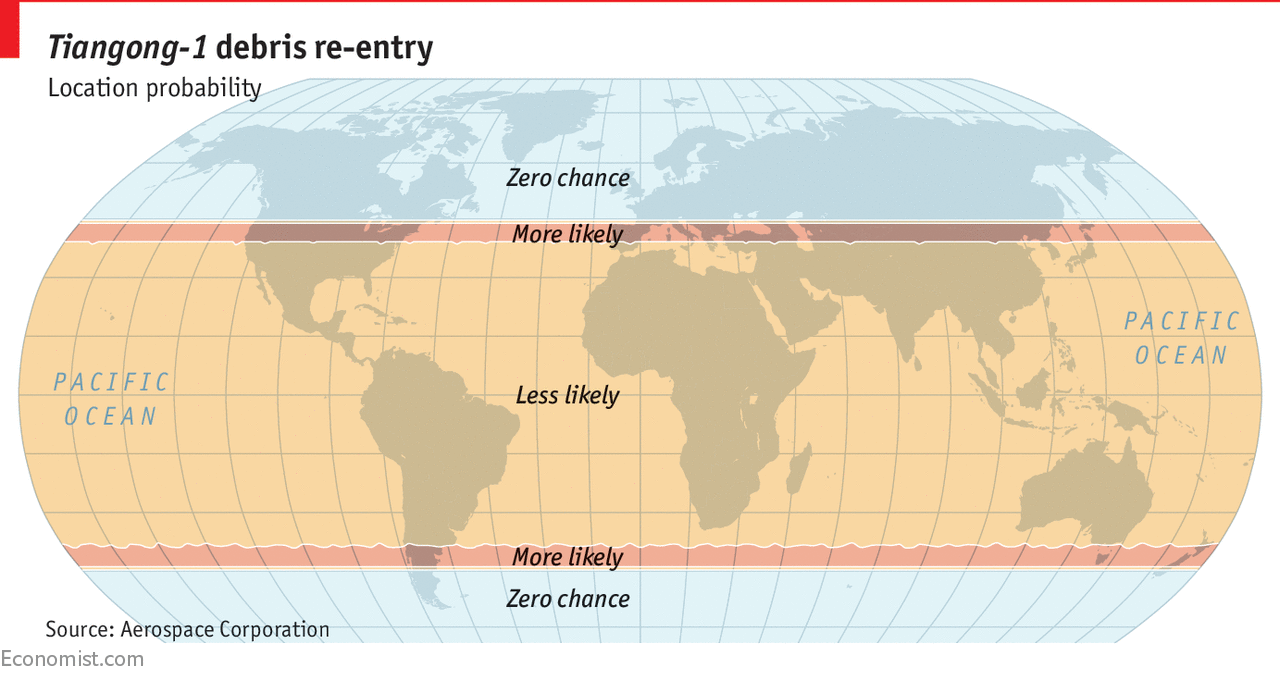
Given its size, it’s likely it will survive the reentry (or some part of it will), creating safety issues in terms of landing. Difficult to prepare when you’re unsure where and when it happens.
There are forecasts, of course: this is the most recent one by the European Space Agency’s (ESA) Space Debris Office in Germany, the agency that issued the warning and a possible timeframe for the re-entry:
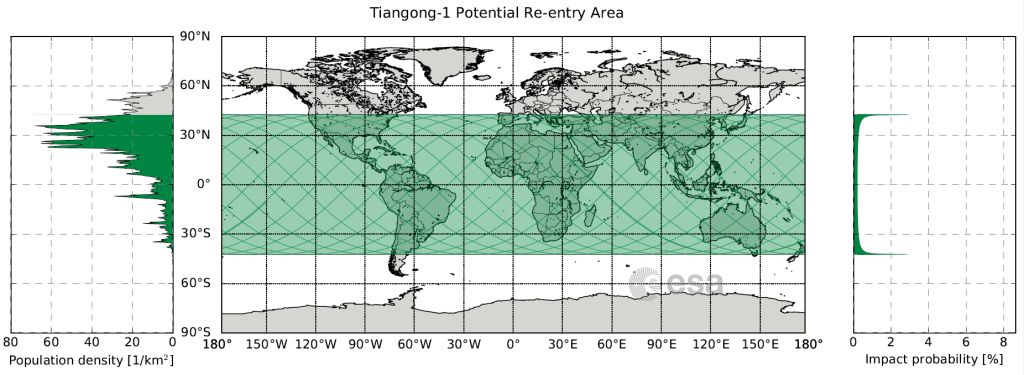
“The current estimated window is ~30 March to ~6 April; this is highly variable.Reentry will take place anywhere between 43ºN and 43ºS (which includes, e.g. Spain, France, Portugal, Greece, etc., as well as many other regions and continents see map here). Areas above or below these latitudes can be excluded. At no time will a precise time/location prediction from ESA be possible. This forecast is being updated approximately weekly.”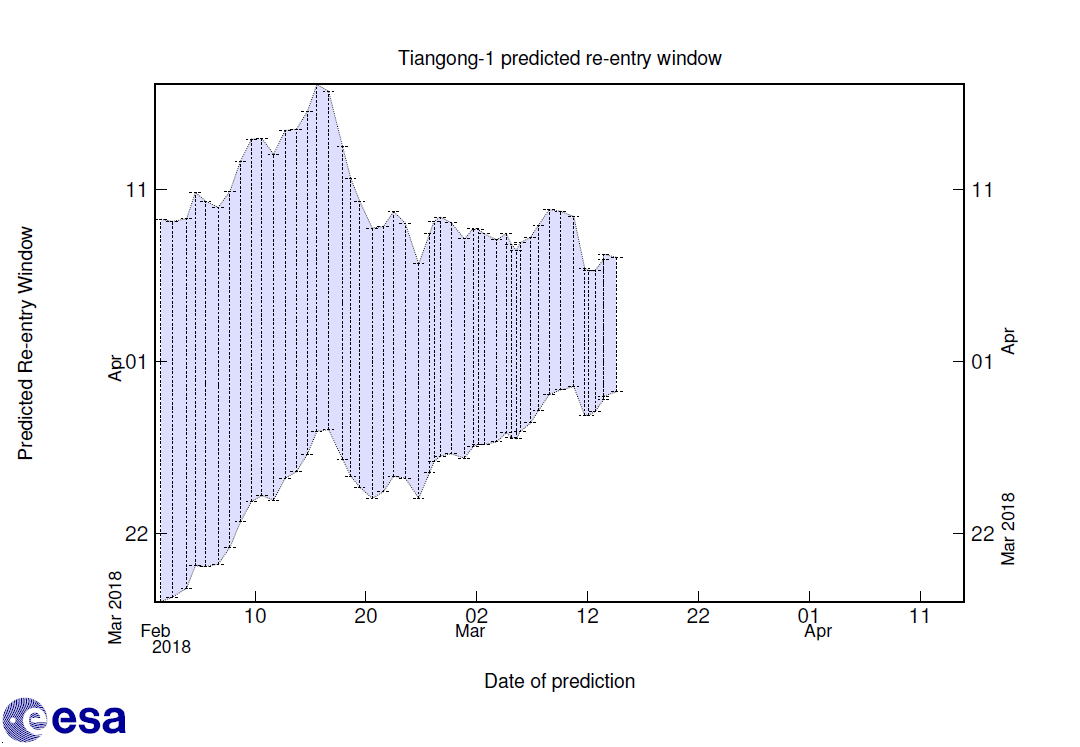
The odds of anybody being hit are low (the world is mostly ocean, and even on land people are scarce compared with the available area). The risk per se, however, can’t be ruled out, and the only way to minimise them is by a controlled re-entry, a procedure which is becoming increasingly common (according to The Economist, around 40% of rocket stages that end up in space can now restart their own engines and alter their orbits). Not in this case, though. “Tiangong-1 itself was probably supposed to have been guided into the remote southern Pacific Ocean, the dumping site of choice for superannuated space hardware, in 2013. But, says Dr McDowell, the station was kept on as an insurance plan, in case the launch of its successor, Tiangong-2, failed. In the event, Tiangong-2 reached orbit in 2016 without incident. Tiangong-1, meanwhile, stopped working—leaving its fate in the hands of the space-weather gods rather than its controllers on the ground.”
Let’s hope the space gods are in a good mood when it eventually falls down.


Leave a Reply