
That old villas are spooky places is known to everybody. All of us remember creepy stories from our childhood, and there is an entire movie tradition built on this trope – a quick look at IMDB would easily prove it – at least from the Amityville horror series in the 70s onwards there is an endless supply of them. However, not many of these places can pride themselves with becoming the birthplace of something unique in speculative fiction. Let alone to more than one. But that’s exactly what Villa Diodati, on the shores of Geneva’s Lake, is about.

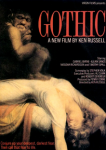
This lovely mansion got a (in)famous name for just one night in 1816, when George Gordon Byron invited some friends over to his residence. One of them was a good friend of his, the poet Percy Bysshe Shelley. He was accompanied by his lover, Mary Wollstonecraft Godwin (his future spouse, better known to the posterity as Mary Shelley) and her stepsister, Claire Clairmont, also Byron’s mistress and mother of his daughter Allegra. There was also another guest worth mentioning, John Polidori, Byron’s personal doctor. In that night of an impossibly rainy June, the group, probably inspired by Fantasmagoriana, a collection of horror stories, allegedly decided to run a horror competition, where each of them had to contribute their own original piece. A lot has been speculated about what exactly took place . There are a few stories and anecdotes (this one I found especially delectable http://blogs.spectator.co.uk/books/2013/09/what-if-byron-and-the-shelleys-had-live-tweeted-from-the-villa-diodati/), and you can even watch some of them, in the vivid interpretation of Ken Russell; his film Gothic, with Gabriel Byrne as Byron, and Shelley played by a young Julian Sand, is all centred on this episode, like an old Greek tragedy observing the three canons of unity of time, place and action. In any case, we will probably never know what exactly happened. What we know for sure it what that night brought us: one of the first sci-fi story ever, Mary Shelley’s Frankenstein, an amazing book so many people make reference to and yet so few have actually read.

In The Detached Retina: Aspects of SF and Fantasy, Brian Aldiss calls Mary Shelley’s story “the first SF books ever written”, that stands alone from the previous Gothic novels in a clear way, making a point about being “scientific-speculative one” (http://books.google.co.uk/books?id=N1WWSRVeOC8C&pg=PA78&redir_esc=y#v=onepage&q&f=false, p. 79).
And what about the other participants? They did contributed something, but definitively more in line with the Romantic zeitgeist: Shelley wrote A Fragment of a Ghost Story, published posthumously as the Journal at Geneva (including ghost stories) and happily forgotten soon after by the majority. More fortune had Fragment of a Novel, a vampire horror story written by Lord Byron and published in his Mazeppa in 1819. But for creepy stuff it is Dr. Polidori the one most of us still remember. While SF purists will not award him too much credit, he was by all means the creator of another very popular genre, the vampire fantasy novels. His short story The Vampyre, published in 1819, portrayed a sensual and seductive vampire named Lord Ruthven, a paper-thin disguise for Lord Byron himself and certainly reminding in some aspects of Anne Rice’s Lestat de Lioncourt exquisite charme.

Not bad, isn’t it, for a placid and beautiful villa. You may actually wonder why it was blessed (or haunted, if we follow Chuck Palahniuk – see the homonymous book, which also features Villa Diodati) by such a peculiar destiny.

Maybe the answer can be found in some previous guests, more than one century before Byron’s party. It is said that Charles Diodati, his rightful owner, in 1639 had welcomed a friend in that same house (http://knarf.english.upenn.edu/Places/diodati.html) – a friend whose spirit seemed to have haunted that place, Mary Shelley and her novel so many years later. Another writer, otherwise responsible for the most enthralling Lucifer ever. His name? Obviously, John Milton, the author of Paradise Lost.


Leave a Reply